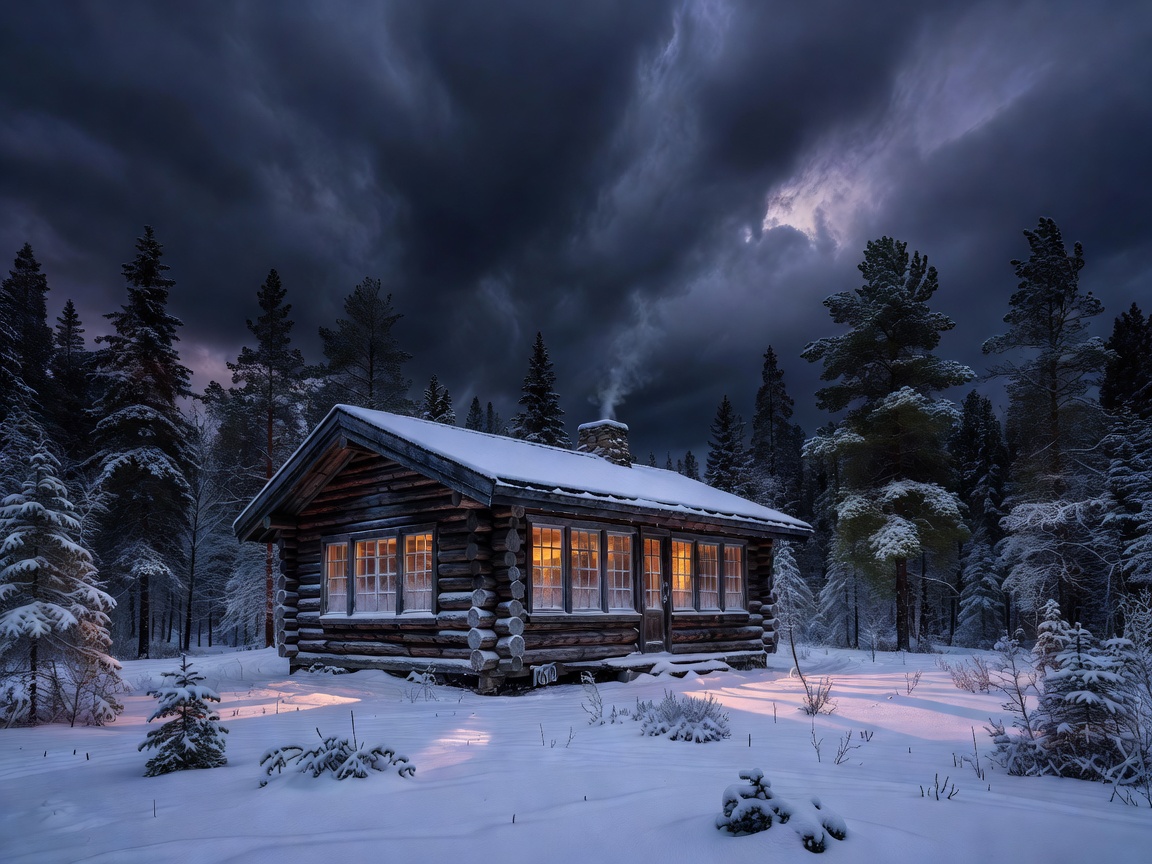
A cabin with a large window can provide a sheltered place to watch the night sky. That is a comfort feature, not a promise of an aurora display. Visibility varies with solar activity, cloud cover, darkness, local conditions and where you are looking. Weather and aurora forecasts can change, and forecasts are not guarantees. Treat the sky as one part of a winter visit rather than the only reason to travel.
Darkness is a combination of place and timing
Artificial light from roads, buildings, security lamps and interiors can reduce contrast. A more remote setting may have less nearby illumination, but “remote” is not a measurable dark-sky guarantee. Ask how close the cabin is to roads or shared facilities and whether exterior lights can be switched off or shielded. Some lighting must remain on for safety. Do not disable required safety lights or walk unfamiliar ground in darkness without a safe route.
Season and latitude influence how many dark hours are available. Daylight changes substantially across northern regions and through the year. A stay timed for long nights may also bring colder temperatures, more demanding travel and limited daytime light. Check local sunrise and sunset times for the dates you are considering. Moonlight brightens the landscape and can make stars less distinct, although it may also make snow scenery easier to see.
Cabin orientation and windows
Ask which direction the main glazed wall faces and what lies beyond it. A wide north-facing pane may give a darker, more consistent outlook in some settings; it is not a universal answer. Aurora can appear in different parts of the sky, and surrounding trees or terrain may block parts of the horizon. A property description that says “panoramic” does not show the actual horizon line. Request a floor plan or a view from the cabin if that information is available.
Window size and frame placement affect how much sky is visible from a bed or chair. Roof glazing can expand the view overhead, but it may reflect interior lights, collect condensation or require blinds for daytime comfort. A fixed pane is not an opening for fresh air. Consider how the space ventilates and how you can move outside safely if the view is clearer away from the glass.
Glare and viewing comfort
Bright interior lamps reflect in glass after dark. Use lower, warm lighting where available and position lamps away from the view. Curtains or blinds improve privacy but block the sky when closed. Ask how these competing needs are handled. A comfortable chair, warm layers and an unobstructed window may matter more than a dramatic architectural feature.
Glass can be cooler than an insulated wall, depending on the system and conditions. A seat directly beside a large pane may feel less comfortable during a long watch. Keep ventilation instructions in mind: breathing, cooking and wet clothes add moisture, and condensation may gather on cooler surfaces. Do not scrape or apply products to glazing unless the property owner instructs you to.
Weather, cloud and a backup plan
Cloud cover can obscure the sky even when other viewing conditions are favourable. Wind, precipitation and changing temperatures affect outdoor comfort and road travel. Check current conditions shortly before departure and during the stay through reliable local services. Build a plan that remains worthwhile if the sky is overcast: landscape walks in daylight, reading, photography, local food or simply using the cabin as a quiet base.
Do not rely on a particular app notification or a single forecast. If you go outside, dress for the actual conditions, tell someone where you are going when appropriate, and stay within safe, permitted areas. Avoid driving to unfamiliar viewpoints in poor visibility solely to chase a forecast.
Key considerations
- No cabin can guarantee aurora visibility.
- Check the window direction, horizon obstructions and nearby lighting.
- Plan for cloud, moonlight and changing forecasts.
- Balance dark viewing with safe outdoor access and indoor comfort.
Good for
Travellers who enjoy night-sky watching, can adapt plans and value a warm indoor viewing option. This style of stay may not suit anyone expecting a scheduled spectacle or wishing to avoid darkness, cold and variable travel conditions.
What to check
Ask about window orientation, blinds, interior lighting, access after dark, nearby artificial light and heating. Check the cancellation terms and transport plan independently. Review current forecasts close to travel, but keep expectations flexible.