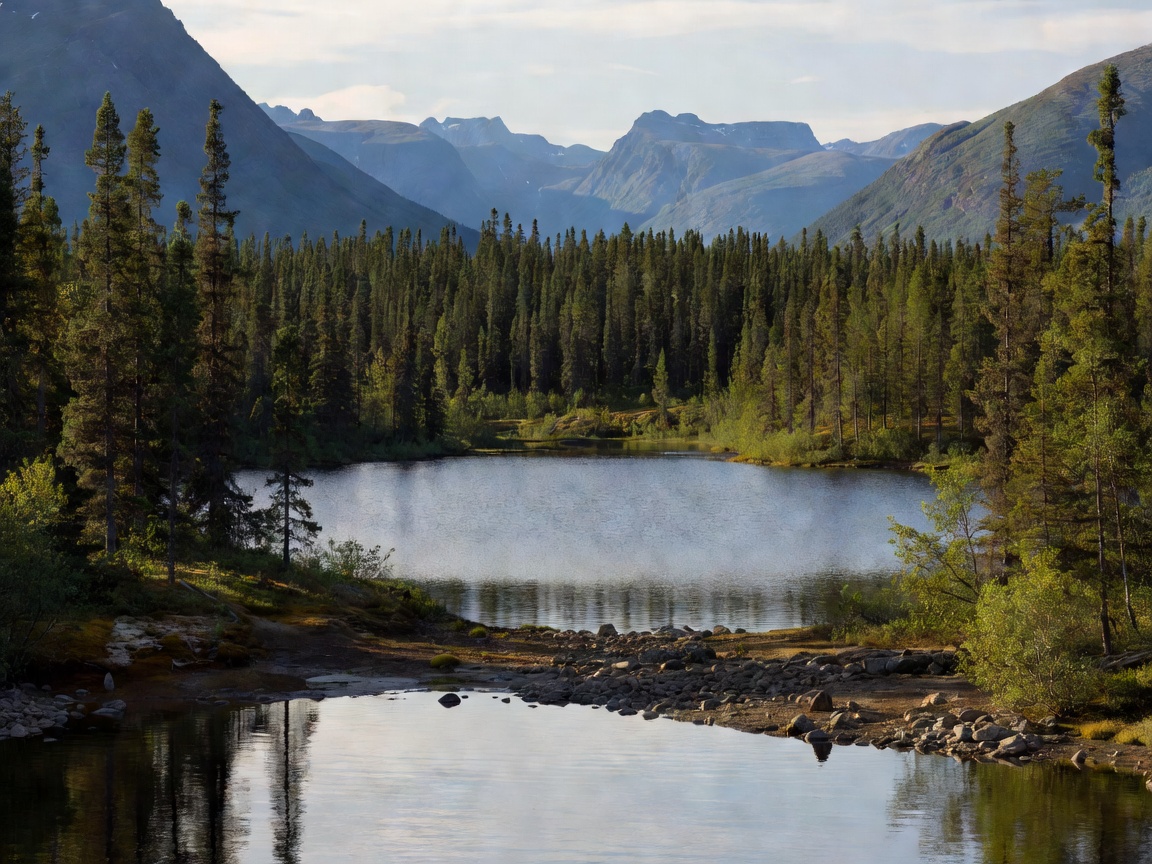
“Remote” describes a feeling, not a transport plan. A cabin can appear isolated in a photograph yet sit close to a road, shared facilities or other buildings. Another may be genuinely difficult to reach in winter. Compare landscapes by the experience they offer and the practical demands they create. This guide does not identify specific properties, confirm openings or quote current prices. Verify all location details with the responsible accommodation provider and current local sources.
Forest settings
Trees provide a close landscape, shelter from some wind directions and a strong sense of enclosure. They can also limit long-distance views and block parts of the sky. Dense forest may feel darker during short winter days. Check the maintained path from the road, the amount of exterior lighting and whether the cabin is visible from shared routes. Tree cover varies with terrain and season, so a summer image may not show the winter outlook.
Lake and shoreline settings
Water creates an open foreground and can reflect changing light. Shorelines may be exposed to wind and can become slippery or snow-covered. Frozen surfaces are not automatically safe to walk on; avoid entering ice unless local authorities provide current, authoritative safety guidance and you have suitable knowledge. Ask how far the cabin is from the water and whether guests are expected to cross uneven or steep ground. A lakeside address does not guarantee a direct view from every room.
Fjord and coastal terrain
Fjord landscapes can combine steep slopes, water and narrow access routes. Wind and precipitation may shift across short distances. Roads can include bends, elevation changes or exposed sections. Confirm the route, parking arrangements and any local transport dependencies. If the cabin sits above the shore, ask about the actual walking route and steps rather than judging distance from a map alone.
Mountain and open country
Higher or more open terrain can bring broad views and greater exposure. Wind, drifting snow and changing visibility may affect travel and time outdoors. Mountain roads may have seasonal restrictions or conditions that are not obvious from a booking description. Check authoritative road updates and follow local safety advice. Ask whether arrival requires a specific vehicle, transfer or final walk, and confirm who provides that information.
Services, access and independence
Distance to services influences how much you need to bring and how flexible the visit can be. Check the nearest practical place for groceries, fuel, medical assistance and public transport. Do not infer current opening hours from a general map result; verify them close to travel. Remote settings may offer quiet, but may also mean fewer alternatives if a road is blocked or a service is unavailable.
Accessibility needs careful, direct confirmation. Ask about the surface from parking, gradients, thresholds, door widths, bathroom fittings, bed access and the distance to any shared facilities. Snow clearance can change the route. Request current details in writing where possible. A landscape photograph cannot establish step-free access.
Weather exposure and landscape fit
Choose the setting that supports the activities you actually want. A sheltered forest may suit quiet outdoor time. Open terrain can suit panoramic views, but may feel more exposed. A shoreline adds visual interest with additional ground and ice considerations. Consider how the view changes in low light, cloud and snow. Ask whether nearby buildings or exterior lamps affect the outlook after dark.
Key considerations
- Confirm exact access arrangements and seasonal road conditions.
- Check distance to services and public transport independently.
- Ask about terrain, snow clearance and accessibility details.
- Do not assume frozen water or mountain routes are safe.
Good for
Travellers who choose scenery alongside practical access, and who can adapt to local weather. Forest, water and mountain settings each involve trade-offs. The right fit depends on mobility needs, transport, desired activities and comfort with remoteness.
What to check
Request directions, arrival instructions, parking details, nearest services and an accessibility description. Check current road and weather information before setting out. Confirm cancellation terms if access conditions change. Avoid relying on broad map estimates for winter driving time.